
What are the Different Types of Piles? A Complete Guide to Symptoms, Grades, and Treatment Options
Understanding the Different Types of Piles and Their Causes
Piles, also known as hemorrhoids, are swollen Blood Vessels and Veins in the Anal Canal, Rectum, or Anus that can cause discomfort, itching, pain, and Rectal Bleeding. Understanding the different types of piles helps patients recognise symptoms early and choose suitable care. This guide explains what the different types of piles are, how they develop, and why timely Piles Diagnosis is important for better colorectal health.
Piles commonly occur due to increased pressure on rectal veins caused by Constipation, Straining During Bowel Movements, pregnancy, prolonged sitting, obesity, and unhealthy bowel movement habits. People often search for different types of piles in the human body because symptoms can vary depending on the location and severity of swollen veins.
The Centre For Piles & Fistula focuses on patient-centred evaluation and advanced care approaches for Ano-Rectal conditions. Proper assessment by a qualified Proctologist or Gastroenterologist helps identify hemorrhoid classification, the causes, and the right management plan.
Internal and External Hemorrhoids: The Basic Classification
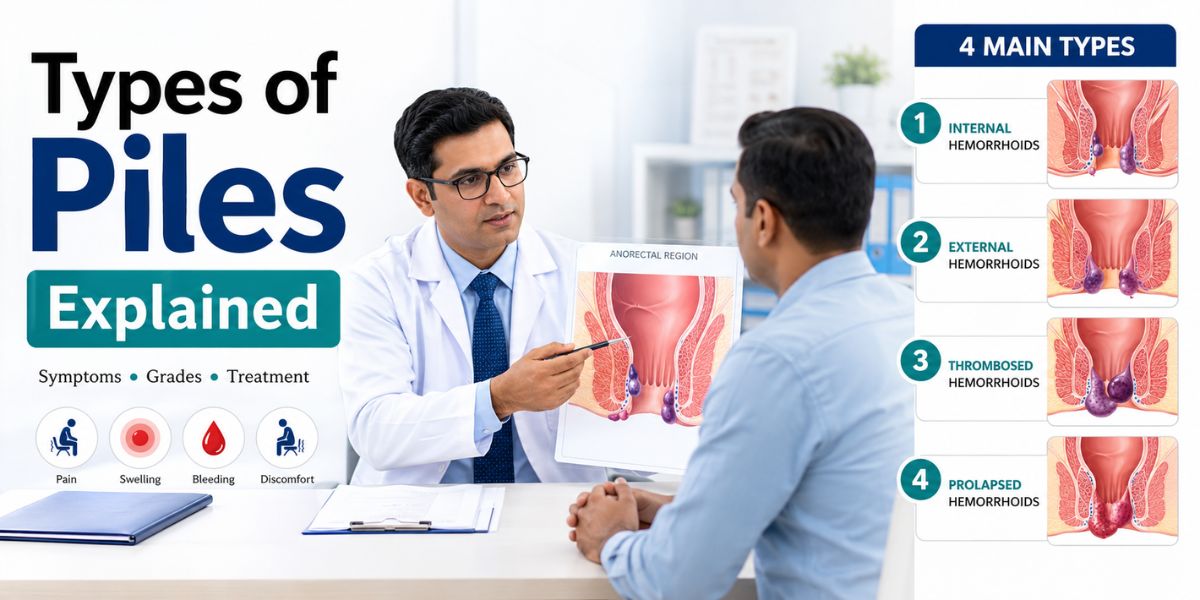
The main types of piles include Internal Hemorrhoids and External Hemorrhoids. Internal piles develop inside the Rectum, while external piles occur under the skin around the Anus. Many patients ask, “What is the difference between internal and external piles?” The key difference is their location and the symptoms they produce.
Internal piles symptoms may include painless bleeding hemorrhoids during bowel movements, while external piles symptoms often include anal swelling, anal itching, and rectal discomfort. Understanding how to identify pile types allows patients to seek treatment before symptoms become severe.
Common Types of Piles and Their Symptoms
The different types of piles disease can be understood through their symptoms and stages. Some patients experience mild piles symptoms, while others develop severe piles symptoms that require professional treatment.
Patients frequently ask, “How many types of piles are there?” Medical experts generally describe four major categories based on hemorrhoid grades: Grade 1, Grade 2, Grade 3, and Grade 4 piles. These grades indicate how far the hemorrhoids have progressed and help doctors decide appropriate piles treatment options.
Different Grades of Piles, Diagnosis, and Modern Treatment Approaches
Knowing the grades of piles is essential for choosing the correct treatment. Piles classification helps doctors understand whether symptoms can improve through lifestyle changes or whether advanced procedures are needed.
Understanding Grade 1 to Grade 4 Piles
Hemorrhoid Grades are commonly divided into four stages:
- Grade 1 piles remain inside the rectum and may cause bleeding without visible swelling.
- Grade 2 piles may come out during bowel movements but return naturally.
- Grade 3 piles may require manual support to return to the inside.
- Grade 4 piles remain outside and may cause significant discomfort.
Patients often search for “What are the four grades of piles?” because knowing the stage helps them understand treatment choices. Advanced cases such as thrombosed piles, prolapsed piles, or recurring hemorrhoids may require specialised medical attention.
Thrombosed hemorrhoids occur when a blood clot forms inside an external hemorrhoid. Many people ask, “What are thrombosed piles, and how are they treated?” Treatment depends on severity and may include medicines, procedures, or surgical treatment when necessary. Prolapsed hemorrhoids occur when internal hemorrhoidal tissue extends outside the anus and may cause irritation or pain.
The Centre For Piles & Fistula provides personalised guidance for patients looking for the best piles doctor in Delhi and suitable solutions based on their condition. Treatment options may include Laser piles treatment in Delhi, Ksharasutra treatment for piles in Delhi, lifestyle-based management, and other proctology treatment approaches.
A detailed piles diagnosis usually includes symptom evaluation, physical examination, and assessment of bowel habits. Doctors consider factors such as constipation management, digestive problems, and inflammation before recommending treatment. Patients searching for the best hemorrhoid treatment in Delhi should choose care based on medical expertise rather than temporary symptom relief.
Also Read: Is Piles Genetic? Understanding Heredity, Family History, Causes, Symptoms, and Risk
Treatment Options Based on Pile Grade
The treatment approach depends on the type, grade, and symptoms. Common options include:
- A high fiber diet, adequate hydration, and healthy digestion practices to support constipation relief.
- Natural piles remedies, such as Sitz Bath and healthy gut habits, can reduce irritation.
- Hemorrhoid Creams and medicines for symptom control when recommended.
- Minimally invasive procedures and Surgical Treatment for Piles for advanced cases.
Many patients also ask, “Can piles disappear without treatment?” Mild cases may improve with natural treatment for piles and Lifestyle changes for piles, but persistent bleeding, severe pain, or recurring symptoms require medical advice. The best treatment for piles depends on accurate diagnosis and individual health needs.
Also Read: Why Is My Stomach Upset in Monsoon? Causes, Symptoms & Prevention Tips
Prevention Tips and Choosing the Right Care for Long-Term Anal Health
Preventing piles requires consistent attention to digestive health, bowel health, and daily habits. Learning how to prevent hemorrhoids naturally can reduce the risk of recurrence and improve overall gastrointestinal health.
Lifestyle Changes and Diet for Piles Prevention
Healthy routines can support piles prevention and reduce pressure on rectal veins. Important steps include maintaining hydration, avoiding prolonged sitting, and following a fiber-rich diet.
Foods that help with different types of piles include fruits, vegetables, whole grains, and other fiber-rich foods that support regular bowel movements. Patients should also avoid excessive spicy foods, dehydration, and habits that worsen constipation.
People looking for natural ways to manage piles often benefit from:
- Regular physical activity improves circulation.
- Drinking enough water for smoother bowel movements.
- Avoiding unnecessary straining during bowel movements.
- Maintaining healthy digestion through balanced meals.
Lifestyle changes for hemorrhoid prevention are useful for reducing symptoms, but they may not replace professional treatment for advanced conditions. Patients should understand the difference between piles and fissure because both can cause anal pain but require different approaches.
Also Read: 15 Best High Fiber Foods for Piles: A Complete Guide to Better Digestion and Natural Relief
When Should You See a Doctor for Piles?
A medical consultation is recommended when symptoms include continuous rectal bleeding, severe anal pain, growing swelling, or when things do not get better. Questions like “Which type of piles causes bleeding?” or “Which piles are more painful?” are usually answered only after a proper examination, because the details matter and it’s not just one simple thing.
The Centre For Piles & Fistula helps patients understand hemorrhoids types and the treatment options, with an emphasis on safe, effective, and personalised care. Whether someone needs guidance for internal piles, external piles, or maybe even advanced procedures, a professional evaluation can really improve the overall outcome, and sometimes it avoids delays.
Learning about different types of piles surgery, along with the treatment options that are available, can help patients decide with more clarity. With correct diagnosis, preventive habits, and timely attention, many people manage piles successfully and keep a healthier anal routine.
If you want to know more about treatment options, consultation services, and advanced care, contact Centre For Piles & Fistula or visit our Google Business Profile. Our experienced team can help you understand your condition and choose the right path for long-term relief.
Recent Blogs
Prunes vs. Prune Juice for Constipation: Whic...
12 Oct 2026
Can Chia Seeds Relieve Constipation? Benefits...
09 Oct 2026
Piles Myths and Facts: What You Should Really...
14 Sep 2026