
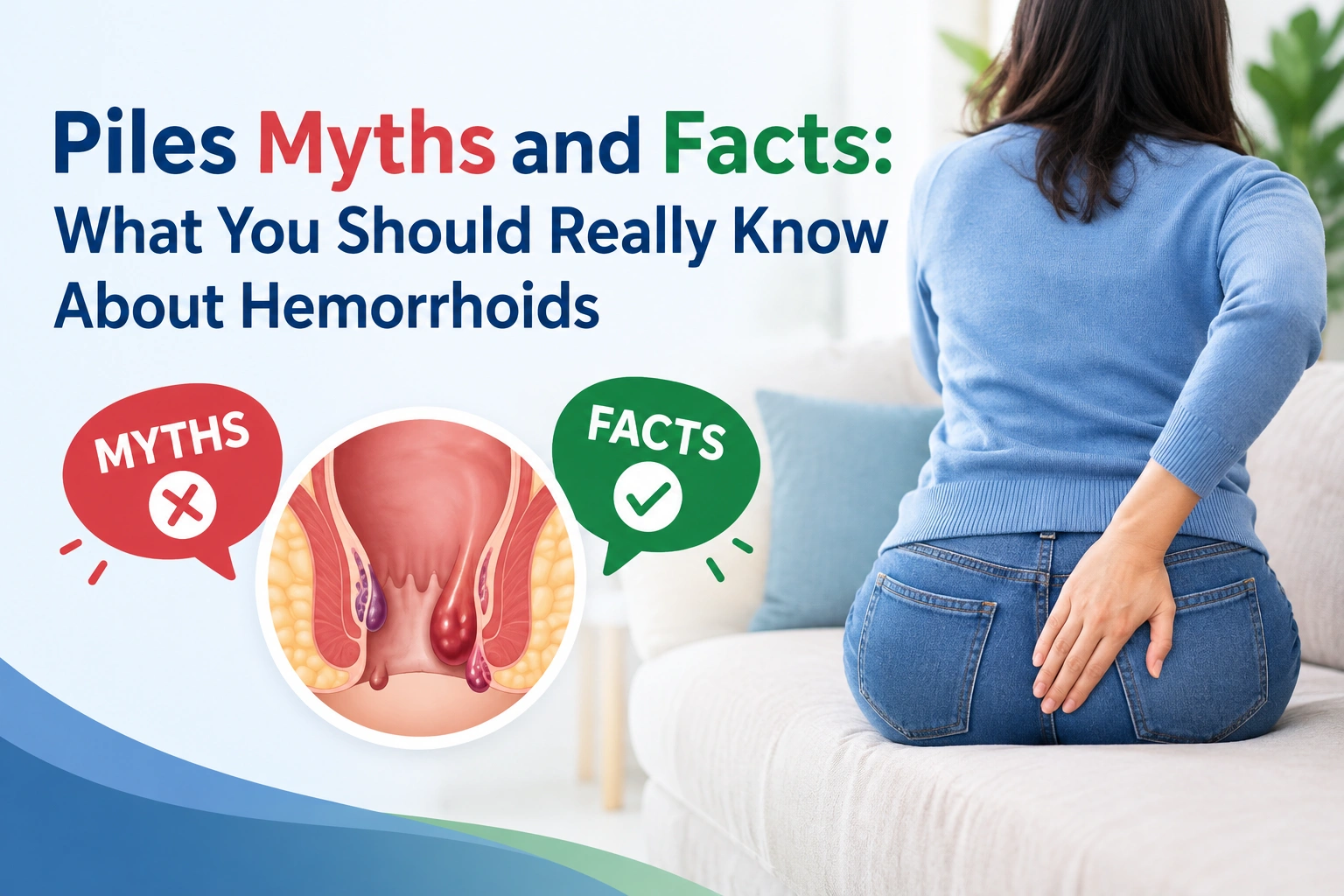
Piles Myths and Facts: What You Should Really Know About Hemorrhoids
Piles, medically known as hemorrhoids, are common, but they are also surrounded by plenty of myths. Some people believe every case of rectal bleeding is caused by piles, while others think hemorrhoids always require surgery. Neither assumption is reliable. Understanding the difference between piles myths and facts can help you recognize symptoms, make sensible lifestyle changes, and know when medical evaluation is necessary. If you are looking for the best fissure doctor in Dwarka, remember that fissures and hemorrhoids are different anorectal disorders and need proper diagnosis rather than guesswork.
What Are Hemorrhoids?
Hemorrhoids are swollen and inflamed veins around the anus or in the lower rectum. They can develop as internal hemorrhoids, which occur inside the anus or lower rectum, or as external hemorrhoids, which develop under the skin around the anus.
The digestive system is not always dramatic about problems, but this area certainly knows how to get your attention. Symptoms can include anal itching, anal discomfort, swelling, pain, and bleeding. Internal hemorrhoids commonly cause painless bright-red rectal bleeding, while external hemorrhoids can cause itching, pain, swelling, or a tender lump.
Piles Myths and Facts: Common Misconceptions
These facts are consistent with medical information from the National Institute of Diabetes and Digestive and Kidney Diseases and Mayo Clinic.
Myth: Hemorrhoids Are Caused by One Thing
There is rarely a single explanation. Causes of piles can include straining while passing stool, chronic constipation or diarrhea, a low-fiber diet, prolonged sitting on the toilet, pregnancy, aging-related tissue changes, and regularly lifting heavy objects.
Chronic constipation deserves particular attention. Hard stools can make bowel movements difficult, encouraging people to strain. That pressure can contribute to venous swelling around the anus and rectum. Pregnancy-related hemorrhoids can also occur because pregnancy increases pressure in the pelvic and rectal area.
The practical lesson is simple: healthy bowel movements matter. Lifestyle changes, particularly improving dietary fiber and avoiding unnecessary straining, can support hemorrhoid prevention and constipation relief.
Myth: Rectal Bleeding Is Always a Sign of Piles
This is one of the most important myths to correct.
Bright-red blood after a bowel movement can occur with internal hemorrhoids, but bleeding during bowel movements is not automatically proof that you have piles. Rectal bleeding can also occur with other gastrointestinal or colorectal conditions. NIDDK specifically warns that bleeding may be associated with bowel diseases, including inflammatory bowel disease and colorectal cancer.
That does not mean every episode of bleeding indicates something serious. It means the symptom deserves appropriate attention, especially when it is persistent, unexplained, heavy, or accompanied by changes in bowel habits, significant rectal pain, abdominal symptoms, dizziness, or other warning signs.
A colorectal specialist, gastroenterologist, or proctologist can determine whether the symptoms fit hemorrhoids or another condition.
Also Read This Blog: Can Junk Food and Poor Diet Increase the Risk of Piles?
Myth: You Have to Live With the Discomfort
Not necessarily. Mild hemorrhoid symptoms can often improve with conservative measures. Increasing dietary fiber can make stools softer and easier to pass. Adequate fluids, avoiding straining, and avoiding long periods on the toilet can also help. A sitz bath, which involves sitting in warm water, may provide temporary symptom relief.
Topical remedies may also help manage mild itching, swelling, or discomfort for some people. However, these products are not a substitute for medical evaluation when symptoms persist or become severe.
For patients who need medical piles treatment, doctors may consider options such as rubber band ligation, sclerotherapy, infrared treatment, or surgery depending on the type and severity of the hemorrhoid. Treatment should be selected after proper assessment rather than simply choosing the procedure that sounds most modern.
At the Centre for Piles & Fistula, patient education should remain part of responsible anorectal care: understanding the diagnosis, available treatment options, expected benefits, and limitations helps patients make informed decisions.
Can Lifestyle Changes Prevent Hemorrhoids?
They can reduce risk and may also help control symptoms. Useful hemorrhoid prevention habits include:
- Eating enough fiber from foods such as fruits, vegetables, and whole grains.
- Increase fiber gradually if your current intake is low.
- Drinking adequate fluids according to your healthcare professional's advice.
- Avoiding straining while passing stool.
- Avoiding unnecessary prolonged sitting on the toilet.
- Staying physically active.
- Addressing constipation instead of repeatedly ignoring it.
These measures focus on healthier bowel habits and reducing unnecessary pressure around the rectum and anus.
When Should You See a Doctor?
You should not rely on internet articles alone when symptoms are persistent or unusual. Seek professional medical advice if rectal bleeding continues, symptoms do not improve after about a week of appropriate home care, or you develop significant pain or other concerning symptoms. Severe anal pain combined with rectal bleeding, particularly with abdominal pain, diarrhea, or fever, requires prompt medical attention.
A thrombosed hemorrhoid, for example, can produce severe pain, swelling, inflammation, and a hard or discolored lump because a blood clot has formed in an external hemorrhoid.
If you are researching laser piles treatment in Delhi, focus first on whether the treatment is appropriate for your diagnosis rather than choosing a procedure based only on the word “laser.” A qualified clinician should explain why a particular treatment is suitable for your condition.
Conclusion: Get the Right Diagnosis and Take the Next Step
The biggest takeaway from these piles myths and facts is that hemorrhoids are common and often manageable, but symptoms should not be dismissed automatically as piles. Rectal bleeding, persistent pain, swelling, itching, or changes in bowel habits deserve appropriate attention.
The Centre for Piles & Fistula aims to provide professional guidance for patients dealing with anorectal concerns, with diagnosis and treatment decisions based on individual symptoms rather than internet myths.
If your symptoms are troubling you, visit our Google Business Profile and contact us to learn more about your evaluation and treatment options. Getting the right diagnosis is a much better strategy than letting myths make the medical decisions for you.
Recent Blogs
Piles Myths and Facts: What You Should Really...
14 Sep 2026
Can Junk Food and Poor Diet Increase the Risk...
12 Sep 2026

Is Piles Genetic? Understanding Heredity, Fam...
10 Aug 2026