
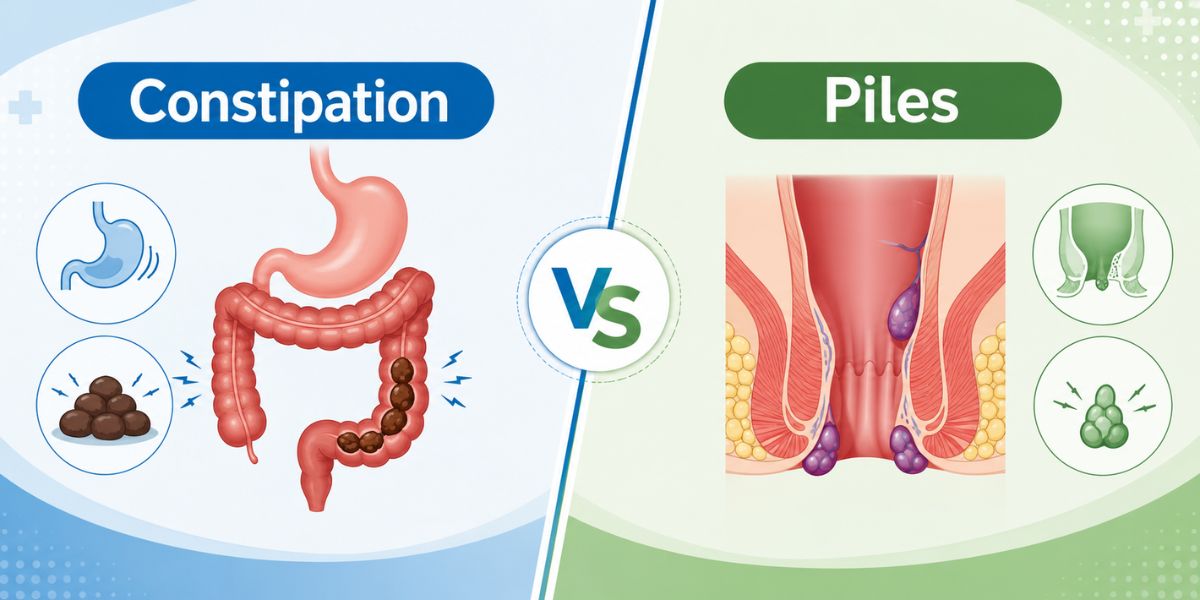
Constipation vs Piles: Symptoms, Causes, Differences & Treatment Guide
Digestive issues can silently affect daily comfort, work performance, sleep quality, and emotional well-being. Among the most common concerns seen in Indian adults are constipation and piles. Many people confuse these conditions because both can lead to toilet pain, rectal pain, and difficulty during bowel movement problems. However, understanding constipation vs piles is important because the causes, progression, and treatment methods are different.
At Centre For Piles & Fistula, we regularly meet patients who delay treatment because they assume piles and constipation are the same problem. In reality, chronic constipation can increase the risk of swollen veins in the rectum tissues, eventually leading to piles after hard stool and repeated straining during stool. Early diagnosis helps prevent complications and improves digestive health naturally.
People searching for the best piles doctor in Delhi or a trusted constipation doctor in Delhi should first understand the piles and constipation difference so they can choose the right treatment path and avoid unnecessary suffering.
Understanding Constipation vs Piles, Symptoms, and Root Causes
Constipation and piles are closely connected but medically different conditions. Constipation refers to difficulty passing stool, while piles are inflamed or swollen blood vessels in the anal region. Many patients with chronic constipation eventually develop hemorrhoid symptoms because excessive pressure damages rectal veins.
What Is the Difference Between Constipation and Piles?
The most important difference between constipation and piles lies in the origin of the problem. Constipation starts in the digestive system, while piles develop around the anal canal.
Many people searching online for hemorrhoids vs constipation are often unsure whether their symptoms are digestive or anorectal. If you experience constipation symptoms without bleeding, constipation is more likely. If you notice bleeding, anal discomfort, or symptoms of piles in adults, piles may already be developing.
Also Read: Sitting Too Long Piles: Causes & Prevention Tips
Common Constipation Symptoms and Piles Symptoms You Should Never Ignore
Patients often ignore early signs until the pain becomes severe. Knowing the warning signs can help prevent long-term complications.
Common constipation symptoms include:
- hard stool and dry bowel movement
- incomplete bowel emptying
- stomach heaviness and gas
- straining during stool
- Reduced digestive health
- bowel movement problems lasting several days
Common piles symptoms include:
- Bleeding during bowel movement
- anal swelling near the anus
- burning sensation and itching
- sitting pain, piles, or constipation, confusion
- rectal pain while passing stool
- hemorrhoid symptoms with irritation
People often ask, "Can constipation cause piles?” Yes, repeated pressure due to chronic constipation can enlarge rectal veins and lead to piles due to chronic constipation. Another common concern is whether constipation is a symptom of piles. In some cases, painful piles may make passing stool difficult, indirectly worsening constipation.
Medical experts also note that poor lifestyle habits, long sitting hours, low physical activity, and a lack of a fiber-rich diet increase the risk of both constipation and piles home treatment failures.
Constipation vs Piles Treatment Options, Diet Plans, and Home Remedies
The treatment approach depends on whether the patient has constipation, piles, or both conditions together. Some people only need dietary correction, while others require medical procedures for severe constipation and piles treatment.
Best Treatment for Constipation and Piles According to Severity
Doctors usually begin with lifestyle correction before recommending advanced procedures. The right plan depends on symptom intensity, age, digestion, and medical history.
Constipation treatment may include:
- Increasing water intake
- Adding a fiber-rich diet
- Regular exercise for better gut health
- Using a stool softener under medical guidance
- Improving sleep and eating routines
Piles treatment at home may include:
- Warm sitz baths
- Avoiding spicy and oily food
- Reducing prolonged toilet sitting
- anal pain home remedies using warm compresses
- Home remedies for piles caused by constipation
When symptoms become severe, medical care becomes necessary. Patients searching for the best piles doctor in Delhi should seek expert evaluation if they experience recurring bleeding, severe anal discomfort, or painful swelling.
In many cases, people with constipation and hemorrhoids benefit from combined treatment that focuses on digestion and anorectal healing together. This is why patients also search for a reliable constipation doctor in Delhi who understands anorectal complications.
Best Diet for Constipation and Piles for Faster Recovery
Food habits directly affect digestion and bowel movement quality. The best diet for piles and constipation should improve stool consistency and reduce pressure on the rectum.
Healthy dietary recommendations include:
Avoid excessive fried foods, processed snacks, alcohol, and smoking because they worsen bowel movement problems and increase inflammation.
Many people ask how to know if they have piles or constipation. If diet correction improves symptoms quickly, constipation may be the primary issue. Persistent bleeding or anal swelling usually points toward piles.
At Centre For Piles & Fistula, patients often receive integrated advice combining modern diagnosis with holistic digestive care. This approach supports long-term relief instead of temporary symptom control.
Long-Term Prevention, Expert Advice, and Recovery Tips in Constipation vs Piles Cases
Preventing recurrence is equally important as treatment. Many patients recover initially, but experience repeated symptoms because they return to unhealthy routines too quickly.
How to Prevent Piles from Constipation Naturally
Simple daily habits can reduce the risk of both constipation and hemorrhoids.
Regular prevention methods include maintaining hydration, exercising daily, avoiding delayed bowel movements, and improving digestive health through balanced meals. Doctors also recommend avoiding mobile phone use during toilet time because prolonged sitting increases rectal pressure.
If you notice early signs of piles due to constipation, such as bleeding during bowel movement or itching after stool passage, seek medical guidance early. Delayed treatment may worsen anal swelling and increase discomfort.
Patients dealing with constipation bleeding vs piles bleeding should understand the difference carefully. Constipation-related bleeding usually occurs because of hard stool, while piles bleeding often appears bright red and repeated.
Another commonly searched issue is constipation vs hemorrhoids symptoms. Constipation generally causes abdominal heaviness and dry stool, while piles involve visible swelling, bleeding, and anal discomfort.
When Should You Consult a Specialist for Constipation and Hemorrhoids?
Many Indian patients depend entirely on home remedies for constipation and piles for months before consulting a doctor. While natural care helps mild cases, severe symptoms need expert evaluation.
Consult a specialist immediately if you experience:
- Recurring rectal pain
- Persistent bleeding
- Severe anal swelling
- Painful constipation and hemorrhoids together
- Fever or infection near the anal area
- Piles after hard stool repeatedly
- Unexplained weight loss
- Constipation with rectal pain lasting more than two weeks
Under Indian medical ethics and healthcare regulations guided by the National Medical Commission (NMC), patients have the right to receive informed diagnosis, treatment transparency, and proper consultation before any procedure. Choosing experienced specialists improves treatment safety and recovery outcomes.
Many patients also suffer from common digestive disorders such as irritable bowel syndrome, acidity, or poor digestion that indirectly contribute to constipation. This is why doctors often evaluate the complete digestive system before recommending advanced procedures.
For moderate cases, natural remedies for piles and constipation combined with hydration and proper sleep may help. However, severe cases involving piles due to chronic constipation may require laser-based procedures or advanced anorectal care.
At Centre For Piles & Fistula, expert consultation focuses on identifying what causes constipation and piles while designing personalised treatment plans for long-term relief. Patients looking for the best piles doctor in Delhi or an experienced constipation doctor in Delhi often benefit from early intervention, proper dietary guidance, and minimally invasive treatment methods.
Conclusion
Understanding constipation vs piles can help patients take early action before symptoms become severe. Although both conditions may involve toilet pain, bowel movement problems, and rectal discomfort, they require different treatment approaches. Recognising constipation symptoms, piles symptoms, and the difference between constipation and piles helps prevent complications and improves recovery outcomes.
A healthy lifestyle, timely diagnosis, balanced hydration, regular exercise, and the best diet for constipation and piles can significantly improve digestive health and reduce future risks. If you are facing constipation and hemorrhoids repeatedly, do not ignore the warning signs.
If you are searching for trusted guidance, expert diagnosis, or advanced care options, consult experienced specialists and learn more about effective treatment solutions for Constipation vs Piles through professional medical support and personalised care plans.
Recent Blogs
Prunes vs. Prune Juice for Constipation: Whic...
12 Oct 2026
Can Chia Seeds Relieve Constipation? Benefits...
09 Oct 2026
Piles Myths and Facts: What You Should Really...
14 Sep 2026