
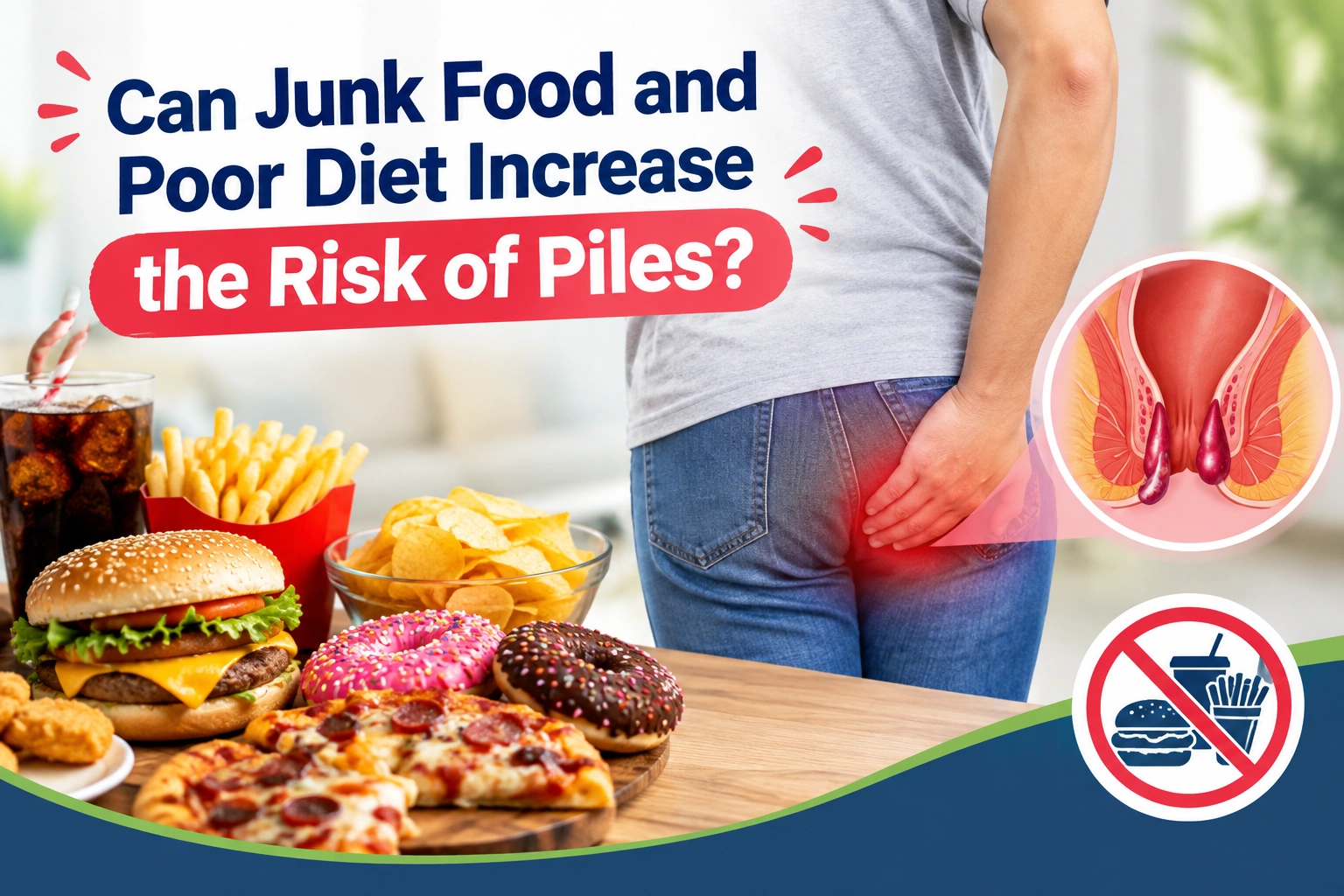
Can Junk Food and Poor Diet Increase the Risk of Piles?
A burger once in a while is hardly a medical emergency. But when fast food, fried foods, refined carbohydrates, sugary foods, and other low-fiber choices become the regular stars of your plate, your digestive system may not be quite as amused. So, can a poor diet increase the risk of piles? The answer is that diet can contribute to important risk factors, particularly constipation and straining. If you are looking for the best piles doctor in Delhi, remember that persistent rectal bleeding or anal discomfort deserves proper medical evaluation rather than a diet experiment.
What Are Piles and How Does Diet Fit In?
Piles, medically called hemorrhoids, are swollen and inflamed veins around the anus or in the lower rectum. They may cause symptoms such as rectal bleeding, anal swelling, itching around the anus, pain during bowel movements, or general anal discomfort.
Diet does not act like a switch that simply “creates” piles. Instead, dietary habits can influence stool consistency, bowel regularity, constipation, and the amount of straining needed during bowel movements. These factors matter because constipation, a low-fiber diet, and straining during bowel movements are recognized risk factors for hemorrhoids.
That explains the connection between piles and junk food more accurately than saying every slice of pizza or packet of chips directly causes hemorrhoids.
Can Junk Food Increase the Risk of Piles?
The bigger concern with junk food is often what it replaces.
Many fast foods, processed foods, fried foods, and prepared snack foods contain little dietary fiber.
A consistently low-fiber eating pattern can make stools harder and more difficult to pass. That can encourage straining and disturb comfortable bowel movements. Over time, this creates a plausible pathway between an unhealthy diet and piles.
The same principle applies to processed foods and hemorrhoids. The problem is not that processed food automatically causes hemorrhoids. The issue is that a diet dominated by low-fiber foods may leave less room for fruits, vegetables, whole grains, and legumes that support healthy stool formation.
The Low-Fiber Diet and Piles Connection
A low-fiber diet and piles often become connected through constipation.
Dietary fiber helps add bulk to stool and can make it easier to pass. NIDDK recommends high-fiber foods for people with hemorrhoids because softer, easier-to-pass stools can reduce pressure during bowel movements.
Research also supports the role of fiber. A systematic review of seven randomized trials involving 378 people found that fiber reduced the risk of persistent hemorrhoid symptoms and bleeding compared with non-fiber treatment.
In simple terms: more fiber can mean easier stools, less straining, and better bowel habits.
Foods to Avoid for Piles: What Actually Makes Sense?
Searches for foods that cause piles can make it sound as though doctors have a secret blacklist hiding in the kitchen. The evidence is more practical than that.
If constipation is part of the problem, consider limiting foods with little or no fiber, including frequent portions of chips, fast food, highly processed snacks, and some prepared foods.
What about spicy food and piles? This deserves a little myth-busting. A randomized controlled trial found that red hot chili pepper did not significantly worsen hemorrhoidal symptoms in people with symptomatic hemorrhoids. Therefore, it would be misleading to claim that spicy food universally causes piles.
However, individual tolerance matters. If a particular meal clearly increases burning or discomfort for you, reducing it while symptoms settle may be reasonable.
Similarly, high-fat foods and piles should not be labelled as direct causes without evidence. Their practical concern is that a diet heavy in fried or highly processed foods may displace fiber-rich foods and contribute to an overall dietary pattern that is less supportive of bowel regularity.
What Should You Eat? Building a Piles Diet
A sensible piles diet or hemorrhoids diet does not need to be boring. Think of variety rather than punishment.
Good options include:
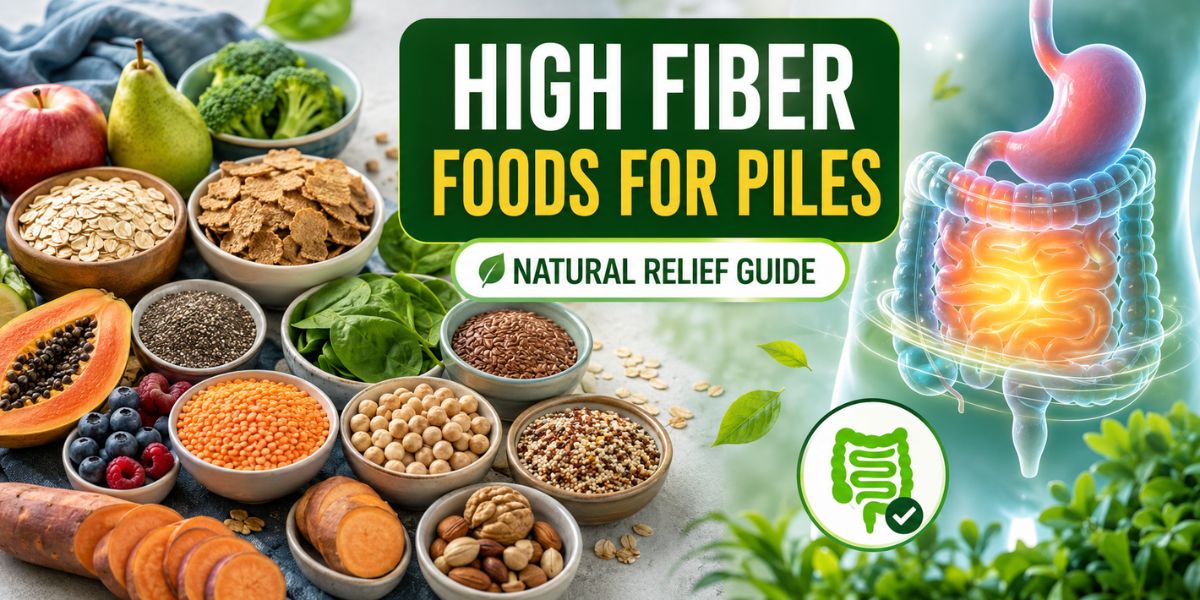
- Fruits such as pears, apples with the skin, berries, and oranges
- Vegetables such as carrots, peas, broccoli, and leafy vegetables
- Whole grains such as oats and whole-wheat products
- Legumes such as lentils, chickpeas, kidney beans, and other beans
- Nuts and other naturally fiber-containing foods
- Adequate water and other suitable fluids
These choices provide fiber-rich foods for piles and can support intestinal health, gut health, and normal stool consistency. NIDDK also advises drinking enough fluids because liquids help fiber work effectively.
Both soluble fiber and insoluble fiber have roles in a balanced diet. Instead of obsessing over one type, focus on eating a varied diet containing vegetables, fruits, whole grains, and legumes.
Constipation, Straining, and Piles: The Real Connection
One of the clearest dietary causes of piles is not a specific food but the constipation that can accompany poor eating habits.
Hard stools can make bowel movements difficult. You may then spend longer on the toilet or start straining during bowel movements. These habits can aggravate hemorrhoidal symptoms. Hydration, fiber, physical activity, and sensible toilet habits can therefore form an important part of piles prevention through diet and lifestyle.
A sedentary lifestyle can also work against regular bowel habits, so regular physical activity has value beyond simply "burning off" a fast-food meal.
Also Read This Blog: Is Piles Genetic? Understanding Heredity, Family History, Causes, Symptoms and Risk
Can Diet Alone Treat Piles?
Not always.
A healthy diet for hemorrhoids can help improve bowel habits and reduce constipation-related pressure, but it cannot guarantee that existing hemorrhoids will disappear. Treatment depends on the type, severity, symptoms, and individual circumstances.
The Centre For Piles & Fistula can be considered when you need professional assessment of persistent symptoms rather than trying to manage everything through diet alone. For people researching laser piles treatment in Delhi, the appropriate treatment should be decided after a qualified clinical evaluation rather than based solely on an online description.
Most importantly, do not automatically assume that every episode of rectal bleeding is caused by piles.
When Should You See a Doctor?
Seek medical advice if symptoms continue despite home measures or if you experience rectal bleeding. Severe anal pain with bleeding, particularly when accompanied by abdominal pain, diarrhea, or fever, requires prompt medical attention.
A doctor can distinguish hemorrhoids from other anorectal or gastrointestinal conditions and recommend appropriate treatment.
Conclusion: Improve Your Diet, Protect Your Digestive Health
The relationship between junk food and piles is more nuanced than a simple “eat this, get piles” formula. A diet dominated by low-fiber, highly processed foods can contribute to constipation and harder stools, while fiber-rich foods, adequate hydration, regular activity, and healthier bowel habits can support digestive and colorectal health.
Your occasional samosa does not need to be treated like a criminal suspect. The bigger goal is your overall eating pattern.
If you have persistent piles symptoms, anal swelling, itching, pain during bowel movements, or rectal bleeding, professional assessment is important. Visit our Google Business Profile and contact us at the Centre for Piles & Fistula to discuss your symptoms and appropriate care options.
Recent Blogs
Can Junk Food and Poor Diet Increase the Risk...
12 Sep 2026

Is Piles Genetic? Understanding Heredity, Fam...
10 Aug 2026
15 Best High Fiber Foods for Piles: A Complet...
07 Aug 2026