
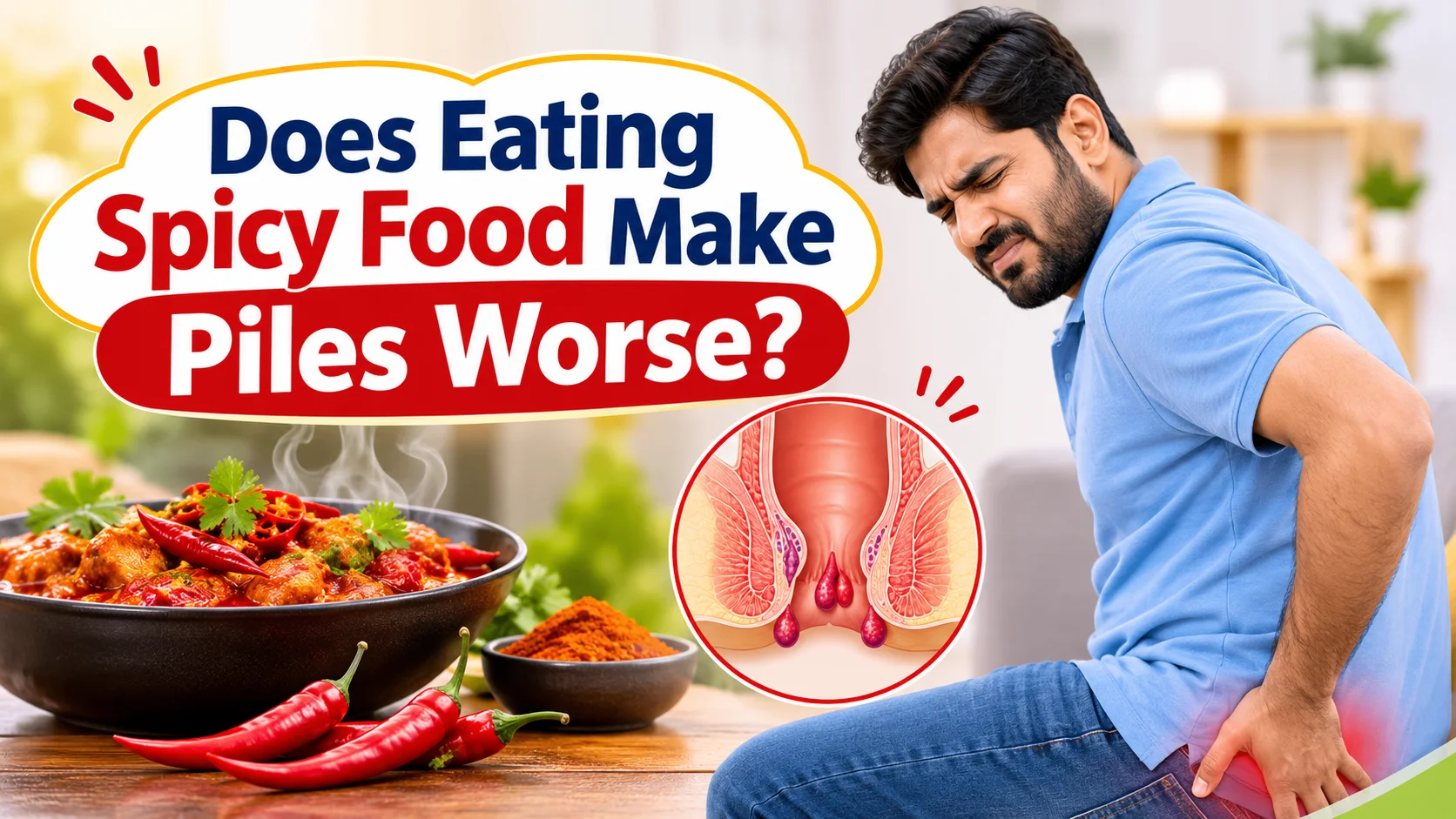
Does Eating Spicy Food Make Piles Worse? Myths and Facts Explained
If you are suffering from piles, you may have heard that eating spicy food can make your condition worse. But is this medically true, or is it another common digestive health myth? People searching for the best female doctor for piles in Delhi often have similar questions about diet, discomfort and symptom management. Understanding whether Spicy Food Makes Piles symptoms worse requires looking beyond traditional advice and examining actual medical research.
At Centre For Piles & Fistula, providing reliable information about anorectal health is important for helping people make informed decisions. The good news is that you do not necessarily need to say goodbye to every spicy dish. However, understanding your digestive response, maintaining healthy bowel movements and recognising potential dietary triggers can make a difference.
Let's separate medical facts from common myths.
What Are Piles and Why Do They Develop?
Piles, medically known as haemorrhoids, are swollen blood vessels in and around the anus and lower rectum. They develop when the supporting tissues around these blood vessels become stretched or weakened.
There are two main types:
Internal haemorrhoids: These develop inside the rectum and may cause painless bleeding during bowel movements.
External haemorrhoids: These develop beneath the skin around the anus and may cause pain, itching and swelling.
According to the National Institute of Diabetes and Digestive and Kidney Diseases (NIDDK), common contributing factors include chronic constipation, excessive straining, low fibre intake and prolonged sitting on the toilet.
These factors are more directly associated with haemorrhoidal problems than eating chilli or spicy curry.
Myths and Facts About Spicy Food and Piles
There are several misconceptions about spicy food and haemorrhoids. Let's understand what medical evidence actually says.
The bottom line: Spicy food does not automatically make piles worse. However, individual food sensitivity matters. Focus on fibre-rich meals, adequate hydration and healthy bowel habits instead of unnecessarily eliminating every spicy ingredient from your diet.
Does Spicy Food Make Piles Worse? What Does Medical Research Say?
Here is where things become interesting.
Many people believe that red chilli, green chilli and spicy meals directly cause piles or increase internal swelling. However, available research does not establish this relationship.
A prospective, randomised, placebo-controlled crossover trial published in Diseases of the Colon & Rectum in 2006 investigated the effects of red chilli consumption on 50 patients with symptomatic haemorrhoids.
Researchers found no statistically significant worsening of bleeding, swelling, pain, itching or burning after participants consumed chilli compared with placebo.
This finding challenges the common belief that Spicy Food Make Piles symptoms automatically become worse after eating hot food.
However, the study examined a single chilli dose over a short period. It does not prove that every person can tolerate every level of spice.
The practical conclusion: Spicy food is not an established direct cause of piles, and people with haemorrhoids do not necessarily need to eliminate it completely.
Also Read This Blog: Can Chia Seeds Relieve Constipation? Benefits, Risks and Tips
When Can Spicy Meals and Haemorrhoidal Discomfort Become a Problem?
Although the evidence does not establish chilli as a direct cause of haemorrhoids, individual digestive sensitivity still matters.
Capsaicin is the naturally occurring compound responsible for the heat in red chilli and green chilli. Some people experience gastrointestinal discomfort after consuming large quantities of spicy food.
Consider these situations:
Red chilli powder irritation: Excessive chilli consumption may cause a burning sensation during bowel movements in sensitive individuals.
Green chilli intolerance: Some people experience abdominal discomfort after eating green chillies.
Hot curry and bowel discomfort: Certain spicy meals may trigger digestive symptoms in people with sensitive gastrointestinal systems.
Spicy pickle consumption: Pickles containing substantial chilli may aggravate symptoms in people who already notice a connection between spicy food and discomfort.
It is also important to distinguish haemorrhoids from anal fissures. A randomised controlled trial published in 2008 found that chilli consumption increased pain and burning in patients with acute anal fissures.
Therefore, the effects of spicy food may depend on the underlying anorectal condition.
Foods to Avoid During Bawaseer and Better Dietary Choices
Instead of focusing only on foods that taste spicy, pay attention to your overall eating habits.
A fibre-deficient diet can contribute to hard bowel movements, chronic constipation and excessive straining. These factors can increase pressure around haemorrhoidal tissues.
Here is a practical comparison:
Remember, the goal is not to eliminate every flavour from your kitchen. It is to develop soothing dietary choices that support gentle digestion and improved bowel comfort.
Healthy Eating Habits for Effective Symptom Control
Food choices are only one part of managing haemorrhoidal discomfort.
The following habits can support long-term digestive wellness:
Increase fibre gradually: Include fruits, vegetables, whole grains and lentils in your meals.
Drink adequate water: Fluid requirements vary according to health, activity and climate.
Avoid excessive straining: Do not force bowel movements.
Do not sit on the toilet for too long: Avoid unnecessary prolonged sitting.
Respond to natural urges: Do not repeatedly postpone bowel movements.
Monitor dietary triggers: Notice whether particular spicy meals consistently cause discomfort.
If you are considering specialised treatment, Centre For Piles & Fistula can be a starting point for exploring professional guidance, including information about the best kshar sutra treatment in Delhi. Always discuss the suitability of any procedure with a qualified clinician.
When Should You Consult a Doctor?
Dietary changes may help manage mild symptoms, but they cannot diagnose or treat every anorectal condition.
Consult a gastroenterologist or proctologist if you experience persistent rectal itching, painful defecation, anal inflammation or blood in stool.
Bleeding should never automatically be attributed to piles. Other conditions, including anal fissures and diseases affecting the gastrointestinal tract, can produce similar symptoms.
Seek prompt medical attention for severe anal pain or significant bleeding, particularly when accompanied by abdominal pain, fever or diarrhoea.
Early evaluation can help identify the actual problem and support appropriate treatment.
Take the First Step Towards Digestive Comfort
So, does spicy food make piles worse? The scientific evidence does not support the idea that chilli directly causes haemorrhoids or automatically aggravates their symptoms. However, individual food sensitivity and other anorectal conditions can influence discomfort.
Focus on fibre-rich meals, adequate hydration, healthy toilet habits and timely medical evaluation. These simple steps can support better stool passage, reduced irritation and improved quality of life.
At Centre For Piles & Fistula, we encourage people to make informed decisions about anorectal health rather than relying on dietary myths. If you are experiencing persistent symptoms, seek professional medical advice instead of depending entirely on home remedies.
Visit Our Google Business Profile and contact us to learn more about our services and take an informed step towards better digestive health.
Frequently Asked Questions (FAQs)
1. Can eating spicy food cause piles?
There is no established scientific evidence that eating spicy food directly causes haemorrhoids. Constipation, excessive straining and low fibre intake are more recognised contributing factors.
2. Should I completely stop eating red chilli if I have piles?
Not necessarily. Research involving patients with haemorrhoids did not find significant symptom worsening after a single chilli dose. However, reduce chilli if you personally experience discomfort.
3. Does green chilli increase rectal itching?
Green chilli does not automatically cause rectal itching. Individual sensitivity and other underlying anorectal conditions may influence symptoms.
4. Which foods are helpful for piles?
Oats, lentils, whole wheat roti, papaya, guava and green vegetables are useful fibre-containing options. Adequate fluid intake also supports healthy bowel movements.
5. Can spicy food worsen an anal fissure?
Yes. A randomised controlled trial published in 2008 found increased pain and burning among patients with acute anal fissures who consumed chilli.
6. Can dietary changes cure piles permanently?
Dietary changes can improve bowel habits and help manage symptoms, but they do not guarantee permanent removal of haemorrhoids. Some patients require medical procedures.
Recent Blogs
Does Eating Spicy Food Make Piles Worse? Myth...
19 Nov 2026

10 Best Indian Breakfast Foods for Better Dig...
19 Nov 2026
Prunes vs. Prune Juice for Constipation: Whic...
12 Oct 2026